063 90896 | office@brureens.ie | Bruree, Co Limerick.

Parents
School Self Evaluation
We have completed our review of Spelling and Phonics across the school. Our updated School Improvement Plan can be found below.
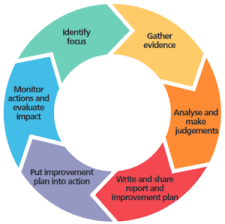
School Improvement Plan 2026–2029
Parent Report: Phonics, Reading and Spelling
Introduction
School Self-Evaluation allows us to review teaching and learning, recognise what is working well and identify areas in which we can improve further.
Our new School Improvement Plan will run from September 2026 to June 2029. Following consultation with pupils, parents and teachers, and a review of assessment information, we have selected phonics, decoding, encoding and spelling as our main focus.
Building on Previous Success
Our previous School Improvement Plan focused particularly on numeracy, including the areas of time and money. This resulted in:
- improved outcomes in standardised mathematics assessments
- increased use of practical and hands-on mathematics activities
- successful blocks of in-class team teaching;
- more opportunities for pupils to work in small groups and explain their mathematical thinking
- greater awareness among pupils of how time and money are used in everyday life; and
- the development of a numeracy webpage to provide practical support for parents.
The school also achieved its digital learning target, with pupils creating and sharing curriculum-based digital content. All teachers engaged in professional learning in preparation for the redeveloped Primary Curriculum.
We will build on the collaboration and successful teaching approaches developed during these previous improvement cycles.
Our New Literacy Focus
Our aim is to develop a clear and consistent approach to phonics, reading and spelling from Junior Infants to 6th Class.
For younger pupils, the emphasis will be on developing strong foundations in phonological awareness and phonics. For older pupils, the focus will move towards spelling patterns, word study, spelling strategies and applying correct spellings in independent writing.
What Do Phonics, Decoding and Encoding Mean?
- Phonics teaches children the relationships between spoken sounds and written letters.
- Decoding means using letter sounds and patterns to read a word.
- Encoding means listening for the sounds in a word and selecting the correct letters or spelling patterns to write it.
These skills are closely connected. As pupils become more confident at hearing sounds, recognising patterns and decoding words, they are better able to encode or spell words accurately.
Junior Infants to 2nd Class
What Do We Hope to Achieve?
We aim to:
- improve pupils’ ability to hear, identify, blend and separate sounds in words;
- strengthen pupils’ knowledge of letter–sound relationships;
- improve pupils’ confidence and accuracy when reading unfamiliar words;
- improve pupils’ ability to spell words containing patterns they have been taught;
- help pupils apply their phonics and spelling knowledge in sentences and independent writing; and
- improve outcomes in the phonics, word-reading and spelling assessments used by the school.
What Actions Will We Take?
The school will:
- teach letter sounds in Junior and Senior Infants using Jolly Phonics songs and stories;
- use the Heggerty programme in Junior and Senior Infants to develop pupils’ awareness of sounds in words
- use UFLI Foundations as the structured phonics approach in 1st and 2nd Class;
- follow an agreed sequence of phonics instruction from Junior Infants to 2nd Class to ensure continuity and progression;
- systematically teach letter sounds, spelling patterns and irregular or “heart” words;
- provide daily opportunities to blend sounds when reading and to segment sounds when spelling;
- use practical activities such as sound boxes, magnetic letters, word chains, mini-whiteboards and dictation;
- use decodable readers and UFLI passages that contain the sounds and patterns pupils have already learned;
- use sentence dictation and short writing activities to help pupils apply their learning;
- provide additional individual or small-group support where required;
- adjust reading groups and support as pupils’ needs change; and
- provide parents with suitable guidance and activities for supporting learning at home.
3rd to 6th Class
What Do We Hope to Achieve?
We aim to:
- improve pupils’ overall spelling attainment;
- increase pupils’ confidence in their spelling ability;
- provide spelling instruction that better reflects individual learning needs;
- help pupils recognise, understand and apply spelling patterns;
- develop pupils’ knowledge of word structures and word origins;
- improve outcomes in the spelling assessments used by the school; and
- improve pupils’ ability to transfer correct spellings into everyday written work.
What Actions Will We Take?
The school will:
- assess pupils to identify their spelling strengths and areas requiring further development;
- group pupils flexibly according to their spelling needs;
- provide differentiated word lists, activities, support and extension work;
- explicitly teach spelling patterns, word structures and effective spelling strategies;
- provide blocks of in-class support to facilitate small-group teaching and targeted intervention;
- use practical activities, including word sorting, mini-whiteboards and dictation;
- provide a common class spelling focus while adjusting the level of work for different groups;
- use suitable spelling programmes and resources to support individualised learning;
- regularly review pupils’ progress and adjust their work where necessary; and
- provide parents with feedback on their child’s progress through normal school communication and parent–teacher meetings.
How Will We Measure Progress?
Spelling tests will continue where appropriate, but they will not be the main measure of progress.
Teachers will place greater emphasis on:
- pupils’ progress in phonics, word-reading and spelling assessments;
- pupils’ ability to blend sounds and decode unfamiliar words;
- pupils’ ability to segment sounds and encode words accurately;
- the application of taught sounds and spelling patterns in independent writing;
- pupils’ use of spelling strategies during written activities;
- samples of pupils’ work;
- teacher observation;
- pupils’ confidence and attitudes towards spelling; and
- progress from each pupil’s individual starting point.
The plan will be reviewed regularly at staff meetings and formally reviewed at the end of each school year. Teaching approaches and supports will be adjusted in response to pupils’ progress and identified needs.
Working in Partnership with Parents
Parents play an important role in supporting children’s literacy development. Throughout the improvement cycle, the school will provide practical guidance on phonics, reading and spelling and will keep parents informed about the approaches being used in school.
By working together, we hope to help every pupil become a more confident and successful reader, writer and speller.